Planning a camping trip for the first time feels more complicated than it actually is. Most people spend too long reading gear reviews and not long enough just picking a date and a place.
This guide fixes that. Follow these steps in order and you’ll have a real camping trip planned — not just researched — by the time you’re done reading.
🏕️ Never camped before? Start with our Ultimate First-Time Camper’s Guide first — it covers what to expect before you start planning.
The 7-Step Plan
Everything else depends on this, so do it first.
Choose a weekend that’s at least 3–4 weeks away. That gives you enough time to book a site, gather gear, and plan food without rushing.
Check the weather forecast about a week out. Camping in the rain isn’t the end of the world — especially with the right gear — but it’s not ideal for a first trip. If a big storm is coming, know your campground’s cancellation policy before you book.
For a first trip, pick somewhere within 2 hours of home. If something goes wrong — you forgot something, you hate it, the weather turns — you can get home without a major ordeal.
Two sites to start: Recreation.gov and ReserveAmerica.com cover most public campgrounds in the US. Search by state, filter by “tent camping” or “tent only” sites.
What to check in the description: flush toilets vs. vault toilets (either is fine — just know what you’re getting), water access on-site, fire rings allowed, and any notes about road access.
Read recent reviews. Sort by most recent and look for patterns — if five different reviews mention the bathrooms are out of order, believe them.
Book 2–4 weeks out for a regular weekend. More for holiday weekends or popular parks.
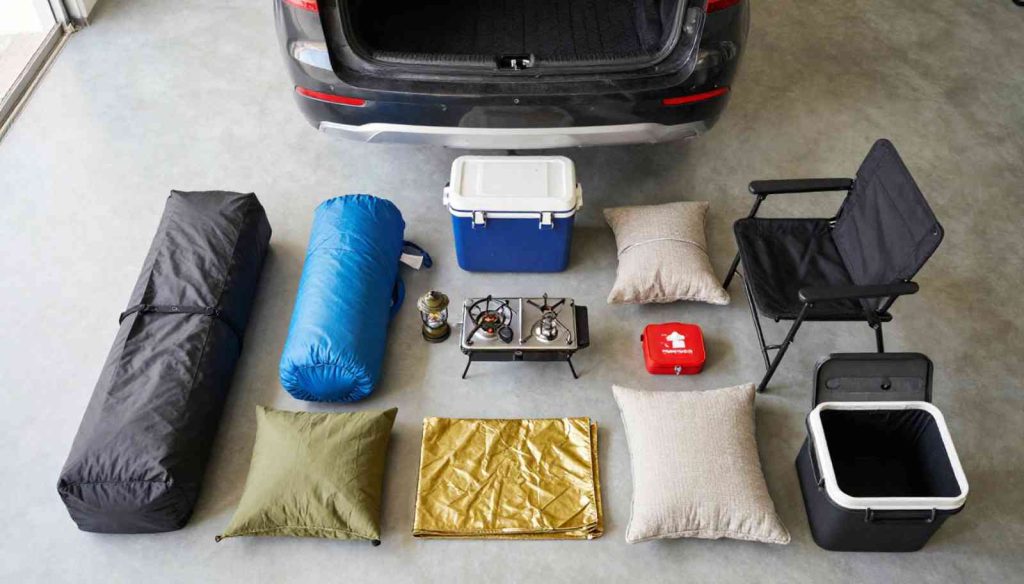
You don’t need to buy everything. Start by listing what you have, what you can borrow, and what you actually need to buy.
- Tent with rainfly
- Sleeping bag (check the temp rating)
- Sleeping pad or air mattress
- Camp stove + fuel
- Lighter
- Pot, pan, utensils, plates
- Cooler with ice, dish soap, trash bags
- Layers
- Rain jacket
- Extra socks
- Comfortable shoes + sleep clothes
- Headlamps (one per person)
- Camp chairs
- Lantern
- Firewood (buy locally)
This is the step most first-timers skip, and it’s why they end up eating gas station snacks for dinner.
Planning your meals ahead of time doesn’t mean making everything complicated. It means knowing what you’re cooking before you’re standing in front of the stove at 7pm, tired and hungry.
| Meal | What to Make |
|---|---|
| Friday dinner | Hot dogs or sausages on the fire — 10 minutes, everyone’s happy |
| Saturday breakfast | Scrambled eggs and bacon on the camp stove |
| Saturday lunch | Sandwiches packed in the cooler from home |
| Saturday dinner | One-pan pasta or burgers on the stove |
| Sunday breakfast | Oatmeal or granola bars — keep it simple, you’ll be packing up |
Make a grocery list based on your meal plan and shop 1–2 days before your trip. Fresh produce and meat go in the cooler. Dry goods like pasta, oats, and coffee go in a plastic bin.
Packing smart makes setup at the campsite much easier.
Pack in reverse order of when you’ll need things. What you need first — camp chairs, stove, food — goes in last so it comes out first. The tent and sleeping bags go in deeper since you won’t touch them until you set up.
Keep one bag accessible for the drive: snacks, drinks, phone charger, reservation confirmation. You don’t want to dig through the whole car for a granola bar on the highway.
Try to arrive at your campsite with at least 2–3 hours of daylight left. Setting up a tent for the first time in the dark is frustrating and takes twice as long.
Arriving with light means you can pick the best spot in your site, set up at a comfortable pace, and have time to get a fire going before it’s fully dark.
Once you’re there, do things in this order:
- Set up the tent first — before you do anything else. It’s the most important task and it’s easier while you still have energy.
- Set up the kitchen area — stove on the picnic table, cooler in the shade, trash bag hung or kept in the car.
- Set up chairs and lighting — headlamps out, lantern on the table, camp chairs unfolded.
- Then relax. You’re camping. That’s the whole point.
A Few Things to Remember
Before You Leave Camp
Before You Leave Home
✅ Pre-Trip Checklist
You’re Ready
The Whole Plan
Pick a date. Book a site. Gather your gear. Plan your food. Pack smart. Arrive with daylight. Set up the tent first.
It’s not complicated. It just feels that way before you’ve done it once.
Go book that site. The hardest part is just deciding to actually go.
📋 Ready to pack? Use our complete car camping packing list — every category, every item, free to save or print.