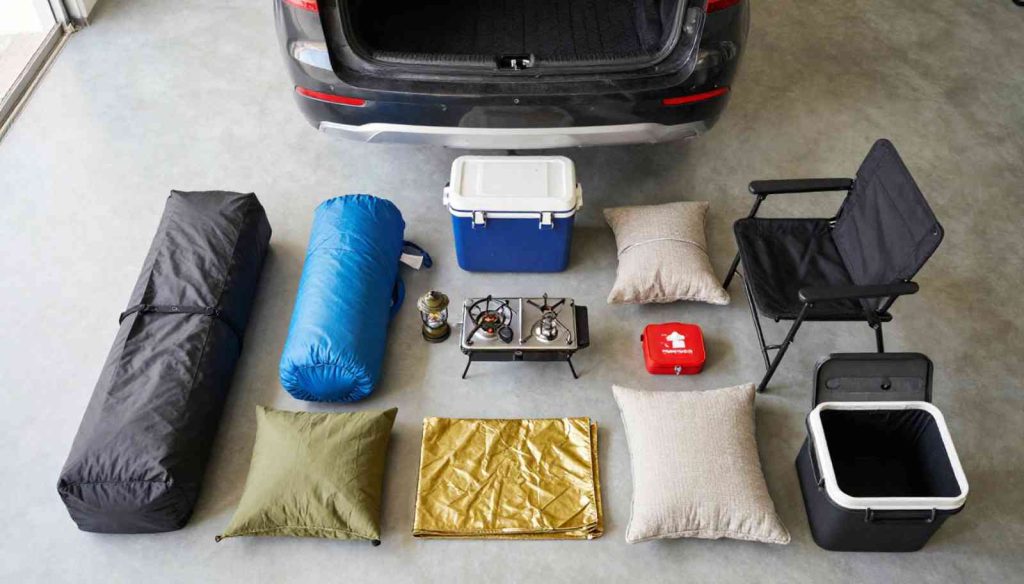
Let me say this right up front: camping is not hard.
I know it can feel overwhelming when you start Googling it. Suddenly you’re reading about water filtration systems and bear canisters and moisture-wicking base layers and you think — maybe I’ll just stay in a hotel.
Don’t do that.
Car camping — which is what this guide is about — is genuinely easy. You drive to a campsite. You set up a tent. You cook food over a stove or a fire. You sleep outside. That’s it.
This guide covers everything a first-timer needs to know. By the end, you’ll know what to bring, what to book, what to eat, and what to expect. No fluff. Let’s go.
Step 1: Pick the Right Kind of Camping
There are a lot of ways to camp. For your first trip, you want developed car camping. Here’s what that means:
You drive your car right up to your campsite. The campsite has a fire ring, a picnic table, and a flat spot for your tent. There are bathrooms nearby — sometimes with flush toilets and showers, sometimes just vault toilets. There’s usually running water somewhere in the campground.
This is not glamping (that’s more like a hotel in the woods). It’s also not backpacking (that’s where you hike miles with everything on your back). It’s right in the middle — real camping, no wilderness survival skills required.
Look for state park campgrounds or national forest campgrounds for your first trip. They’re well-maintained, easy to find, and usually have camp hosts on-site if you need help.
Step 2: Book Your Campsite Early
This is the one thing first-timers get wrong most often. Good campsites book up fast — especially on weekends from May through September.
How to find and book one:
ReserveAmerica.com and Recreation.gov are the two main booking sites for state and federal campgrounds. Create an account on both.
Search within 2 hours of home. Closer is better for your first trip — if something goes wrong or you hate it, you can leave.
Look for “tent only” or “tent/vehicle” sites. Avoid “full hookup” sites — those are for RVs.
Read recent reviews. Look for comments about the site being level, having shade, and being away from the bathrooms (close enough to walk, far enough not to hear the door).
Book at least 2–3 weeks out. Some popular spots book out months in advance.
Aim for a Thursday or Sunday arrival if you have flexibility. Campgrounds are much quieter mid-week.
Step 3: Know Your Gear Basics
You don’t need a lot of gear for your first trip. Here’s what you actually need versus what you can skip.
You Need:
🏕️ A tent
Get a 2-person tent even if you’re going solo — more room. Make sure it includes a rainfly (the waterproof outer cover). Set it up in your backyard before you go. Seriously. You do not want to figure out the poles at 9pm in the dark.
No products found.
🛏️ A sleeping bag
Check the temperature rating. If lows will be 50°F, don’t bring a bag rated to 40°F and call it close enough. Go a little lower than the forecast low.
No products found.
💤 A sleeping pad or air mattress
The ground is hard and cold. Even in summer, sleeping directly on it is uncomfortable. A basic foam pad works. An air mattress is more comfortable if you have the trunk space.
No products found.
🔥 A camp stove and fuel
A simple two-burner propane stove costs about $50 and lasts for years. Don’t try to cook every meal over a campfire — it takes forever and your food will taste like smoke. → See our top camp stove picks under $80.
No products found.
🧊 A cooler
Pack it with ice the night before so it’s already cold when you load your food.

- Metal
- Made in the USA or Imported
- Charming retro design with a high-capacity, heavy-duty build
- 54-quart capacity accommodates up to 85 cans; ideal for parties and gatherings
- Premium insulation offers 4-day ice retention in temperatures as high as 90°F

🔦 Headlamps — one per person
Not a shared flashlight. Headlamps keep your hands free for cooking, setting up camp, and finding the bathroom at 2am.
No products found.
You Can Skip (For Now):
Expensive technical gear, a water filter (campground water is tap water), a camp kitchen organizer, a hammock. Get the basics down first.
Step 4: Plan Your Food
Camp food doesn’t have to be fancy. But it does need to be planned ahead of time — or you’ll end up eating granola bars for dinner.
For a 2-night trip, plan 2 breakfasts, 2 lunches, 2 dinners, plus snacks and drinks. Here’s a meal plan that actually works:
| Meal | What to Make |
|---|---|
| Friday dinner | Hot dogs or brats over the fire |
| Saturday breakfast | Scrambled eggs + bacon on the camp stove |
| Saturday lunch | Sandwiches from the cooler (made at home) |
| Saturday dinner | One-pan pasta or burgers on the stove |
| Sunday breakfast | Oatmeal or granola bars — keep it simple |
Pack everything in a plastic bin or a dedicated camp kitchen box. It keeps things organized and makes setup and cleanup faster.
💡 For Saturday dinner, try our One-Pan Garlic Butter Pasta — one pot, one burner, ready in 20 minutes.
Step 5: Understand Campground Etiquette
Nobody’s going to hand you a rulebook, but here are a few things that will make you a good campground neighbor.
Quiet hours are real. Most campgrounds enforce quiet from 10pm to 7am. Keep music and conversation at a reasonable level after dark.
Leave No Trace. Pack out everything you packed in. Don’t leave trash at the fire ring. Don’t leave food out overnight — it attracts animals.
Don’t cut through other people’s sites. Even if it looks like a shortcut. Stay on the road or designated paths.
Ask before using someone else’s firewood. If the previous campers left a pile, it might belong to the people in the next site.
Don’t bring firewood from home. This is actually a law in many states. It can transport invasive insects that kill trees. Buy it at the camp store or a gas station near the campground.
Step 6: Know What to Expect
First camping trips have a learning curve. Here’s what most people don’t tell you:
It will take longer to set up than you think. Budget an extra 30 minutes the first time. Everything goes faster once you’ve done it once.
You’ll sleep worse the first night. That’s normal. The second night is usually much better once you’ve adjusted to the sounds.
The bugs might be annoying. Bring DEET bug spray. Use it.
You’ll forget something. Everyone does. Most campgrounds have a small store with basics. The rest you’ll figure out or live without. That’s part of it.
You might love it immediately. A lot of people do. There’s something about cooking outside, sitting around a fire, and waking up to birds instead of an alarm that just feels good.
Quick First Trip Checklist
Save this, screenshot it, or grab our full printable packing list here.
🏕️ Shelter
- Tent + rainfly
- Sleeping bag (check the temp rating against your forecast low)
- Sleeping pad or air mattress
- Pillow (bring your regular one — camp pillows are usually terrible)
- Extra blanket
🍳 Kitchen
- Camp stove + fuel canister(s)
- Lighter — pack two
- Medium pot with lid + frying pan
- Utensils, plates, cups
- Cooler with ice
- Dish soap + scrubber
- Trash bags, paper towels, aluminum foil
- Can opener + bottle opener
👕 Clothing
- Layers for cold nights
- Rain jacket — always
- Comfortable shoes + extra socks (one more pair than you think)
- Sleep clothes
🧴 Hygiene
- Toothbrush + toothpaste
- Biodegradable soap
- Hand sanitizer
- Toilet paper (bring your own even if the campground has it)
- Sunscreen + bug spray
🪑 Camp Comfort
- Camp chairs — one per person
- Headlamps + extra batteries
- Lantern
- Firewood (buy it locally, don’t bring from home)
🗺️ Navigation
- Offline maps or printed directions
- Phone charger for the car
- Reservation confirmation — phone or printed
Final Thought
The best camping trip is the one you actually take. Don’t wait until you have the perfect gear or the perfect plan. Book a site, borrow what you can, buy the basics, and go.
You’ll figure out the rest around the campfire.
Have questions about your first trip? Drop them in the comments — we read every one.